Porto Sudeste’s Volunteer Network engages partner companies and turns collaboration into benefits for the community of Itaguaí.
Volunteerism has been gaining new participants on Madeira Island, in Itaguaí. Companies that provide services to Porto Sudeste are also joining a network of social initiatives focused on local residents. This movement shows that, little by little, volunteerism is evolving from an occasional activity into part of the daily routine of those working at the port.
Porto Sudeste’s Volunteer Network brings together employees, local residents, and partner companies in initiatives designed to address community needs. One of the newest members of the Network is Plamont, an engineering company that operates at the terminal. The company has begun supporting free activities promoted by the Network at Casa Porto, a community center maintained by Porto Sudeste on Madeira Island.
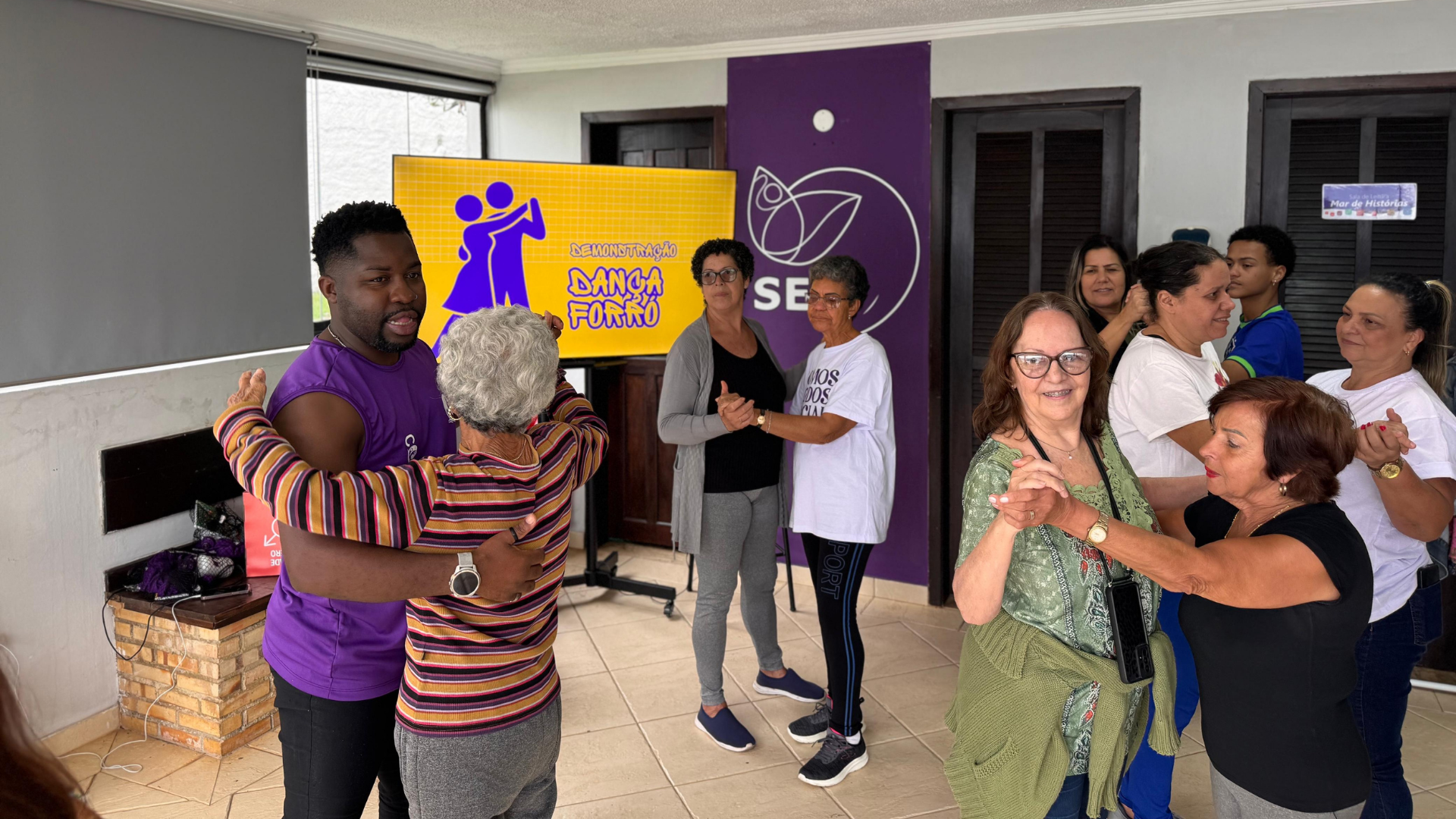
This new partnership has enabled the introduction of additional activities, including jiu-jitsu classes for children and teenagers, self-defense classes for women aged 16 and over, and ballroom dancing classes for young people and adults. According to Plamont directors Diego Pina, who leads Southern and Southeastern Operations, and Oscar Wruck Júnior, from the Commercial Department, participating in the Network helps align the company’s activities with the needs of the communities where it operates.
“Supporting initiatives that create real value in the lives of people in the communities where Plamont operates is part of our core values. Our partnership with Porto Sudeste’s Volunteer Network reinforces and puts into practice our commitment to promoting self-esteem, safety, and well-being in the Madeira Island community. It is also directly connected to the purpose of our Engineering Opportunities Program,” they stated.
This movement can also be seen in the experience of Itaguaí resident Débora Botelho. In addition to volunteering at events, she regularly takes part in the activities offered at Casa Porto.
“I always look for initiatives that truly work and generate practical results for the community, such as the projects developed at Casa Porto. My decision to join the dance and self-defense classes reflects my desire to stay continuously connected to these initiatives, while also benefiting from the positive impacts of dance on health and mobility. The self-defense classes reconnect me with skills I learned during my time working in private security. It is important to be prepared to protect ourselves if necessary, even though we hope never to need to use those skills,” she said.
A close connection to local realities is one of the key factors behind the effectiveness of these initiatives. With 70% of the terminal’s direct and contracted workforce living in Itaguaí, their day-to-day experience in the region helps ensure that community needs are clearly understood and addressed through strong and transparent partnerships.
Plamont’s participation is an example of the multiplier effect that Porto Sudeste seeks to encourage among its partners. In practice, the culture of volunteerism is spreading throughout the terminal. Relationships that begin in the workplace go on to generate projects that extend beyond port operations, bringing different organizations together around a common goal: promoting tangible improvements in society.
* This text has been translated using AI.