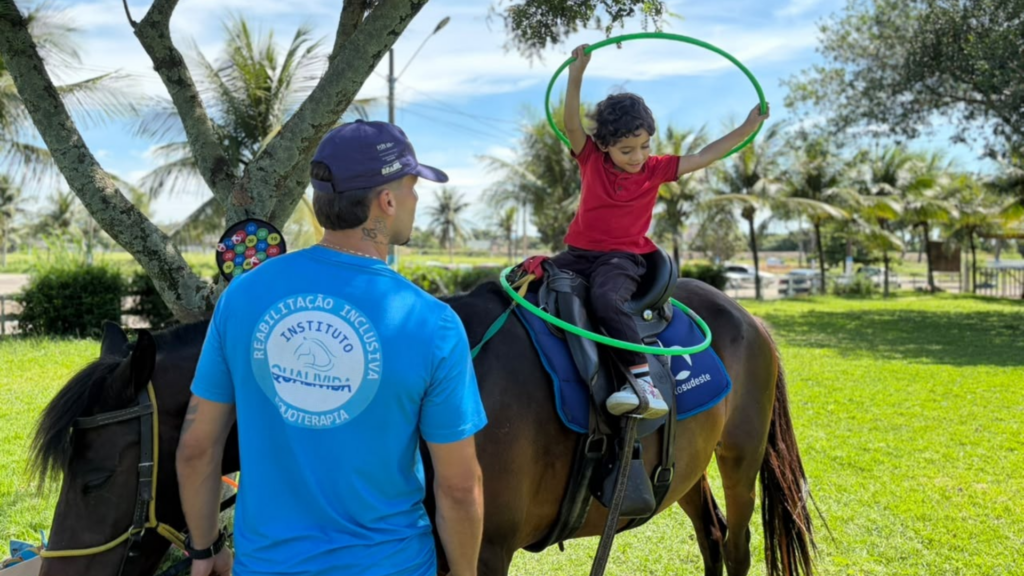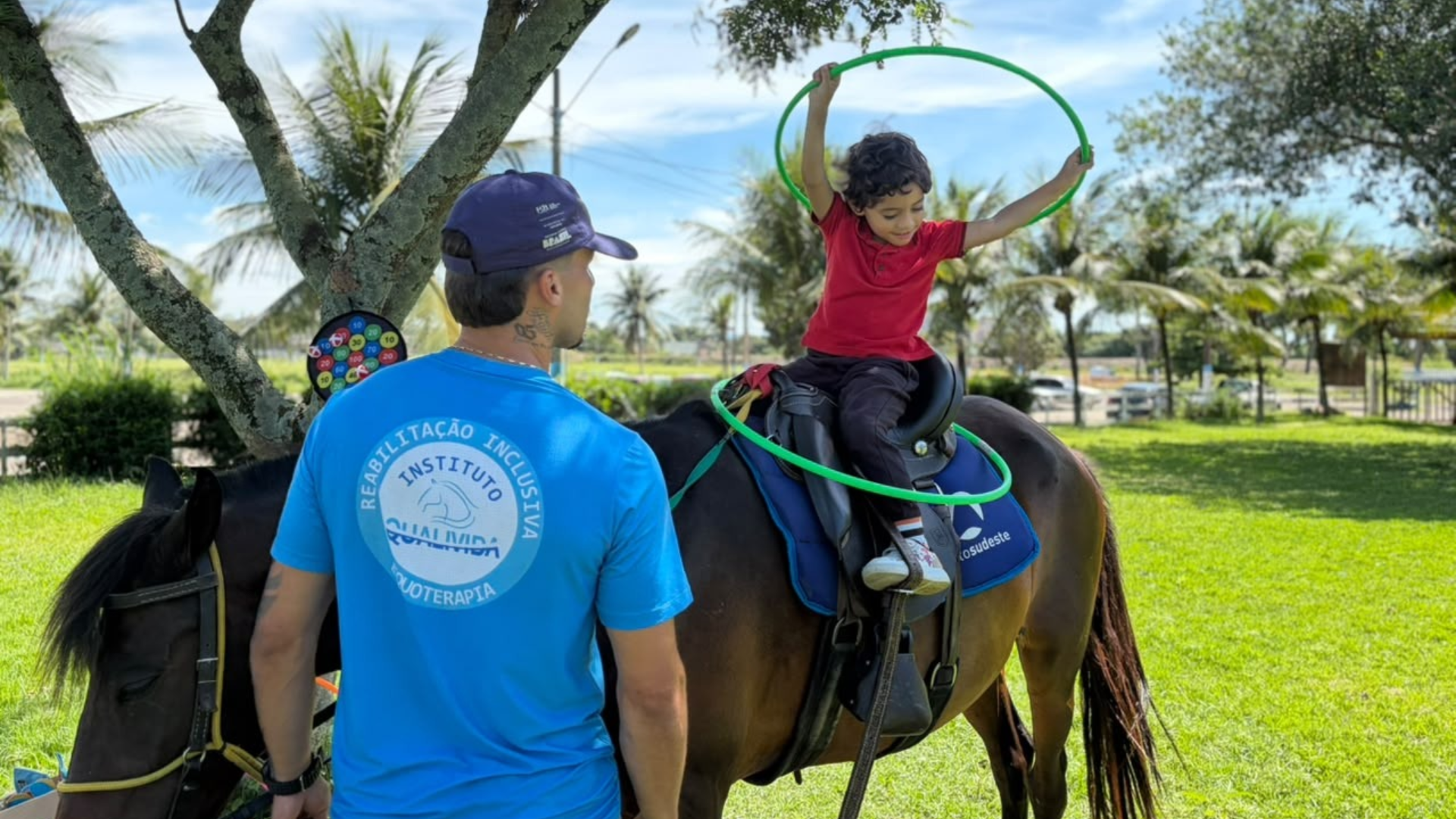
The therapeutic method uses the horse’s movement and guided exercises to strengthen participants’ physical, emotional, and social skills
The bond with horses holds special meaning for Marcelo Cardoso de Paiva, 50. A resident of Itaguaí and an equine-assisted therapy participant, he enjoys riding, hugging the animals, and taking part in exercises during the sessions. “I really enjoy being with the horses. I feel happy when I am with them, and I feel that equine-assisted therapy helps me become more confident,” he says.
Marcelo’s mother, Íris Cardoso, a retired teacher, closely follows her son’s progress. Diagnosed with encephalitis associated with Reye’s syndrome, he has shown changes that his family notices in his daily life, including improved posture, greater confidence when walking, and fewer falls. “It has been wonderful. He counts down the days until he can go back, and he already knows all the horses,” Íris says. According to her, equine-assisted therapy has also helped improve her son’s interaction with others and his participation in activities.
The sessions take place at the Itaguaí Municipal Garden through a partnership between Porto Sudeste, the Municipal Department of Agriculture and Fisheries (SMAP), and Instituto Qualivida Itaguaí. Coordinated by physical therapist Pedro Montenegro, the program uses horses as a therapeutic resource to address different aspects of each participant’s development. The animal’s movement can help stimulate balance, posture, motor coordination, and body awareness. Depending on each participant’s needs, the activity can also foster confidence, autonomy, and social interaction. Exercises are led by a multidisciplinary team comprising a riding instructor, physical therapist, psychologist, and educator.
“In Marcelo’s case, the benefits observed by his family are enhanced by his enthusiasm for the activities. He enjoys guiding the horse and performing the exercises we give him. His connection with the animals and participation in the sessions have become part of a routine that he eagerly looks forward to, and that makes us very happy. Seeing his progress, and the progress of everyone who shares this experience with us, is extremely motivating,” Pedro says.
How to Participate
Anyone interested in participating in the program can contact the local SMAP office for enrollment information. Applicants must provide a medical report containing the diagnosis, a referral for equine-assisted therapy, and a passport-sized photo of the participant. Copies of the participant’s and legal guardian’s Brazilian identity cards (RG) and individual taxpayer identification numbers (CPF), as well as proof of address, are also required. The program is available to individuals aged three and older.
* This text has been translated using AI.