Climate change. Global warming. Carbon emissions. These terms are appearing more and more in the news, but do you know what they really mean in our daily lives?
Many people still ask: “If the planet is warming, why does it still get cold?” Or: “Why does it still rain so much?” The answer is simple. Global warming does not mean that every place will turn into a hot desert. In fact, it disrupts the balance of the planet’s climate.
“When we talk about climate change, many people think of something distant. But the impacts are already part of our routine and can be seen in heavier rainfall, heatwaves, and extreme weather events that we are experiencing more frequently,” says Bernardo Castello, Environmental Manager at Porto Sudeste.
As the Earth’s temperature rises, natural climate patterns begin to shift. That is why we are seeing more intense heatwaves, heavy rainfall, prolonged droughts, storms, very strong winds, and even periods of severe cold in some regions.
Much of these changes occur due to the emission of greenhouse gases (GHGs), especially CO₂ and methane, released by cars, industries, and many everyday activities.
To better understand where these emissions come from and how they can be reduced, they are divided into three scopes. The first refers to direct emissions from operations, such as vehicles and equipment. The second involves electricity consumption. The third considers the company’s entire value chain, including suppliers, transportation, and contracted services.
“Since 2015, when terminal operations began, we have carried out a greenhouse gas emissions inventory. We use software with an updated database and emission factors by source type, which allows us to identify and quantify our emissions. With this data, we guide strategies and actions to address climate change,” Bernardo explains.
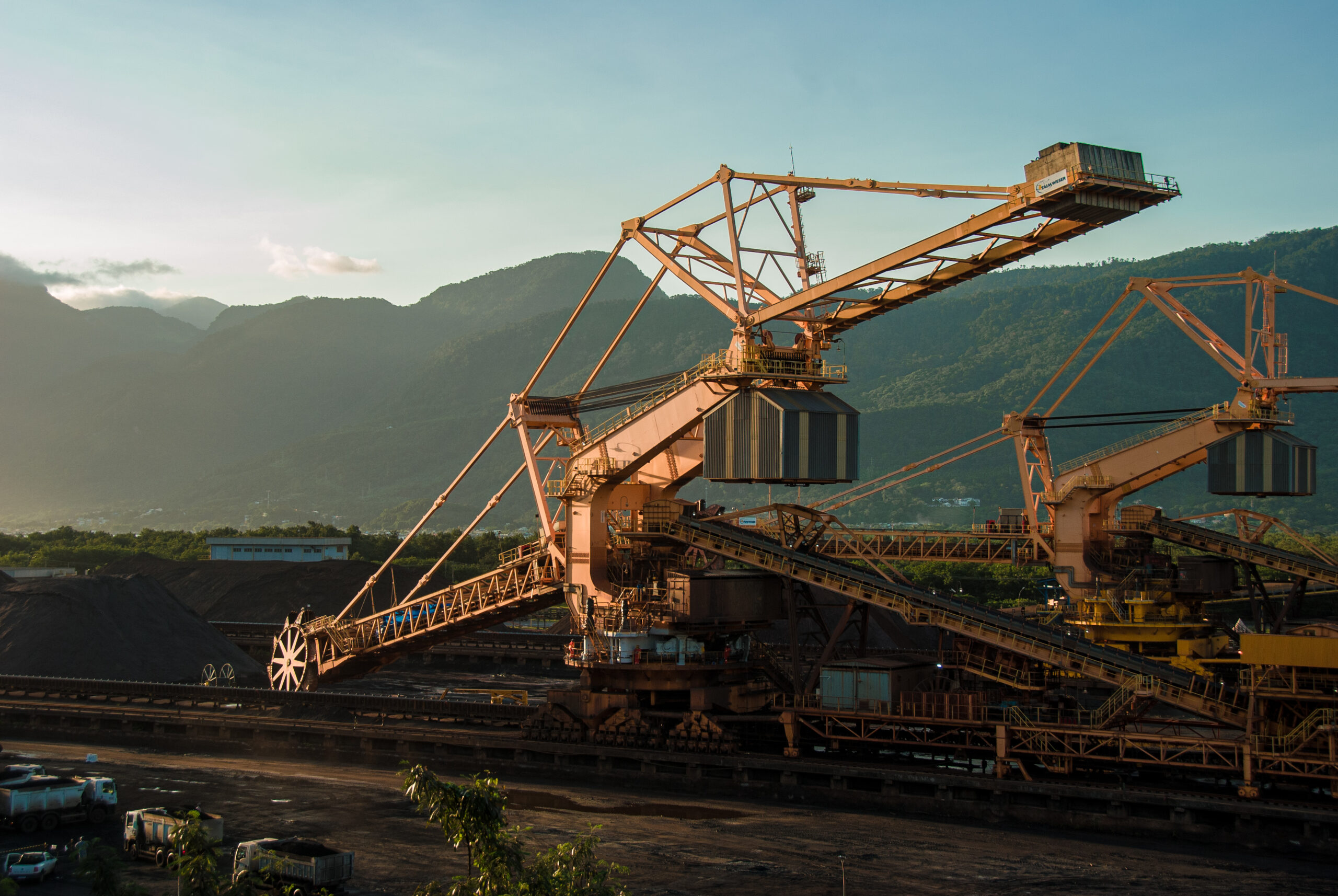
A simple action taken by the company to reduce Scope 1 emissions, for example, was replacing gasoline with ethanol in flex-fuel vehicles. Another measure was purchasing certificates guaranteeing that 100% of the electrical energy used at the terminal comes from clean sources. “With almost all cargo handling equipment electrified, adopting exclusively renewable energy was the alternative we found to combine operational efficiency with climate responsibility,” he adds.
The actions implemented, along with operational improvements and internal initiatives, have contributed to emission reductions over the years. The company’s goal is to reduce Scope 1 and Scope 2 emissions by 50.4% by 2033, using 2021 as the base year.
“Between 2021, our baseline year, and 2025, we recorded a 76% reduction in Scope 1 and Scope 2 emissions, decreasing from 8,174 tCO₂e to 1,965 tCO₂e. Decarbonization is not only an environmental goal, but also a collective responsibility and an opportunity to make operations more sustainable and innovative,” the manager highlights.
These advancements reinforce that addressing climate change does not depend only on large-scale projects. Continuous initiatives, such as process reviews, efficiency gains, and more conscious day-to-day decisions, also play a key role in building a more sustainable future.