Continuous improvements and day-to-day solutions reinforce the strategic role of Porto Sudeste’s socio-environmental agenda.
When people talk about sustainability, it is common to think of preserving natural resources and reducing environmental impacts. But the topic is also directly tied to the way companies and industries conduct their day-to-day operations.
At a port terminal, sustainability means balancing economic development, environmental responsibility, and innovation to ensure increasingly safe and efficient operations. It is an ongoing effort shaped by investments, corporate goals, and the involvement of the people who are part of daily operations.
At Porto Sudeste, this commitment is guided by the SER Program — Sustainability, Balance, and Respect — which directs socio-environmental actions across the company. This agenda is part of the business strategy and is connected to annual goals involving different areas, reinforcing the importance of the issue for the company.
Many of these improvements come from the people who experience the terminal’s routine firsthand. By observing daily challenges, employees develop solutions that help increase process efficiency, reduce waste, and strengthen operational safety.
“Throughout our daily routine, we notice details that can make a difference in safety, in how tasks are carried out, and even in how materials are used. When an idea is put into practice and becomes part of the team’s routine, it is rewarding to see the results,” says Antonio Luiz Freire, known as Maranhão, who reused leftover conveyor belt material to make mud flaps for the fuel service truck.
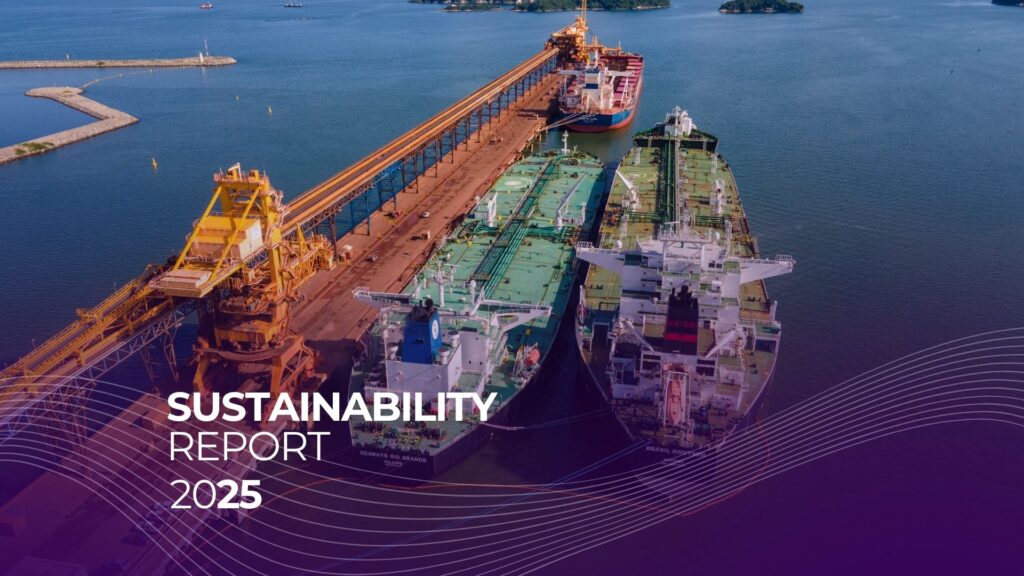
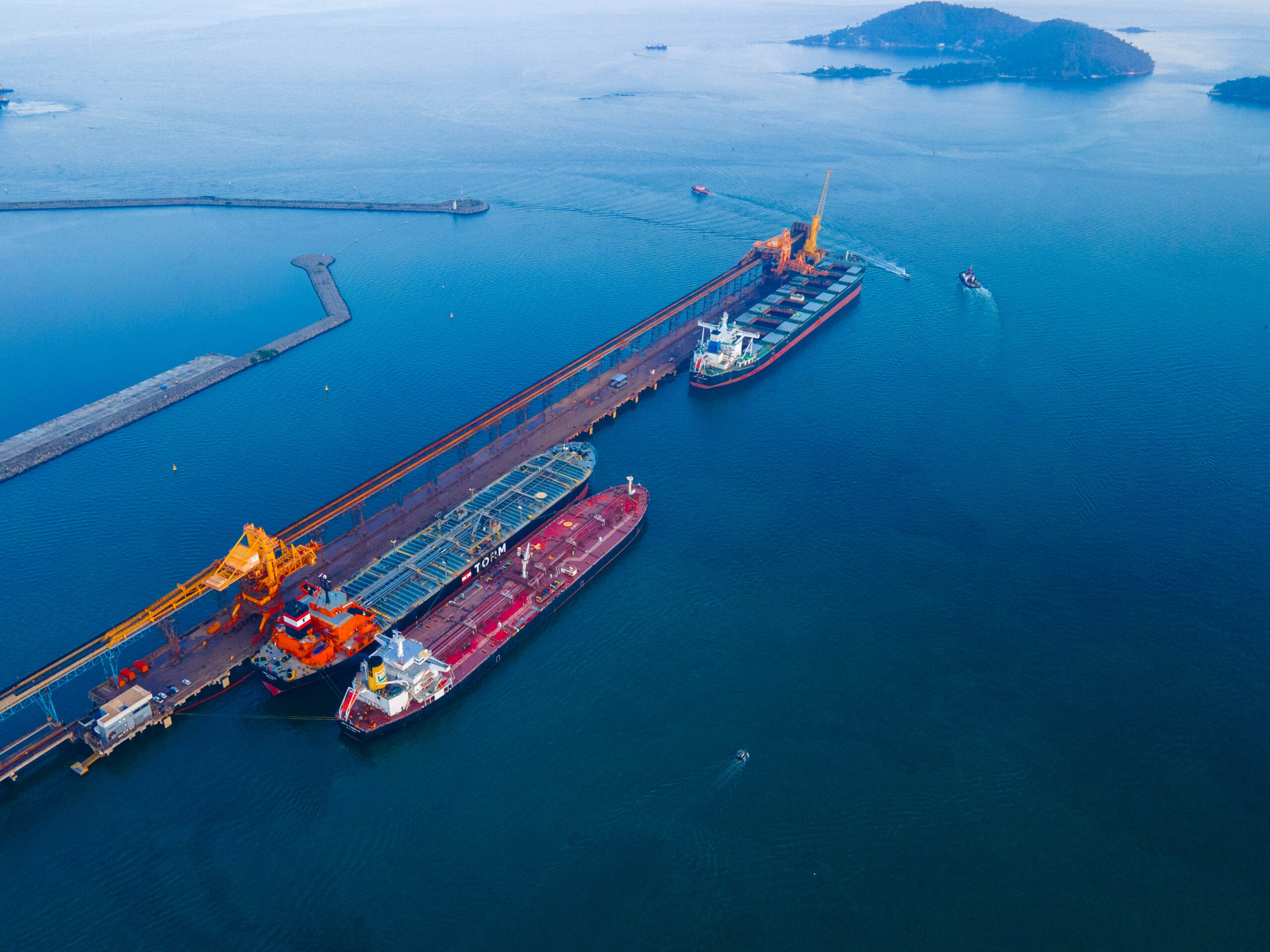
This culture of innovation is also reflected in larger-scale projects. One example was the development of a solution for one of the most sensitive stages of Double Banking operations, the process of transferring liquid bulk cargo (oil and petroleum products) between vessels moored side by side.
After the product is transferred, the hoses — large flexible hoses used in cargo transfer operations between ships — must be drained. This stage requires extra attention, since any remaining residue must be removed safely to avoid environmental impacts.
In an effort to improve this process, an adaptation was made to a flange, a metal component that serves as a connection and sealing point within the system. This improvement brought greater control to the operation, reducing the possibility of oil spills on the vessels’ decks to nearly zero and making the activity simpler and safer for both workers and the environment.
This perspective shows that sustainability does not depend solely on major investments or complex technologies. It is also present in the improvements implemented every day, capable of generating positive impacts for the business, for society, and for the environment.
“What is most interesting is seeing that contributions can come from anywhere. Very often, an observation made during routine work ends up generating an improvement that benefits the entire team and strengthens the operation as a whole,” says Bernardo Castello, Environmental Manager.
In a sector that is strategic to the Brazilian economy, sustainability grows stronger when it becomes part of everyday routine. At Porto Sudeste, it takes shape through initiatives that combine technical expertise, creativity, and responsibility to continuously improve operations.