Porto Sudeste presented its expansion project and stepped up discussions with major companies amid the challenges posed by adverse weather conditions to oil transfer operations
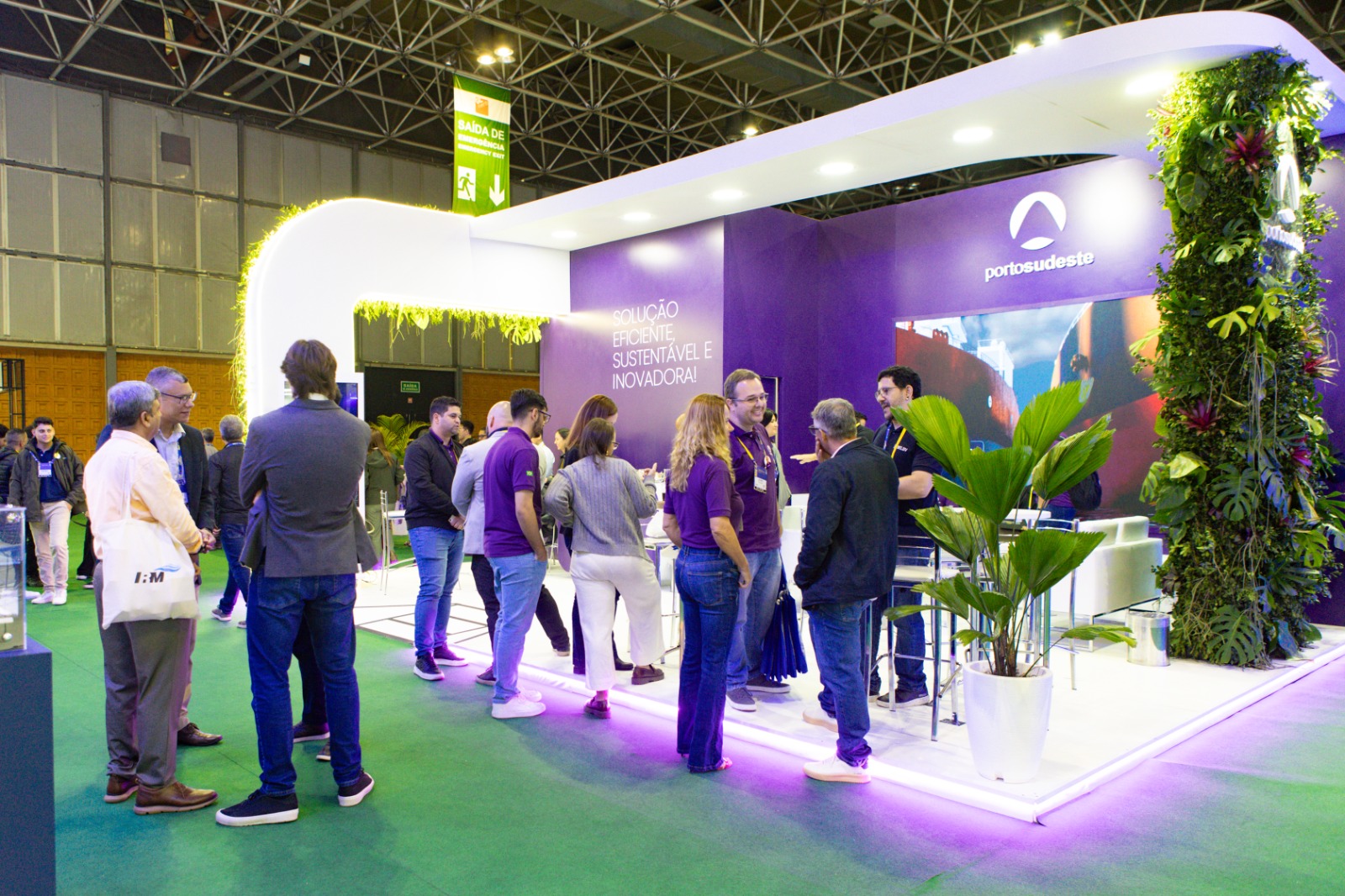
Held from September 21 to 24 at Riocentro in Rio de Janeiro, ROG.e 2026 brought together executives, government authorities, investors, and experts to discuss the main challenges facing the energy industry. One of the topics that gained prominence in discussions among operators, oil companies, and infrastructure providers was the need to strengthen the resilience of the oil logistics chain. Adverse weather conditions have affected offshore platform operations and reduced vessel availability for cargo transfer operations.
During the event, Porto Sudeste presented the progress of its expansion project to the market. The installation of dolphins, marine structures used for berthing and mooring vessels, will expand the terminal’s capacity to handle oil and oil product operations. Scheduled for completion in the first half of 2027, the new infrastructure will enable up to 144 liquid bulk operations per year.
Currently, solid and liquid bulk operations share the port infrastructure. Once the new dolphins become operational, the terminal will have a dedicated area for oil and oil products, helping to improve vessel scheduling predictability and operational efficiency.
Located in the sheltered waters of Sepetiba Bay, in an area with limited tidal variation, Porto Sudeste offers favorable natural conditions for alongside transshipment operations, known as double banking. Greater protection from weather-related disruptions contributes to more regular and predictable operations. Its proximity to the Santos Basin, Brazil’s main pre-salt production hub, also positions the terminal as a logistics alternative for handling offshore production.
“ROG.e gave us the opportunity to present the project directly to the companies facing these logistics challenges. The interest shown during the event reinforces the importance of highly predictable solutions, particularly in light of Brazil’s growing production and the increasing complexity of offshore operations,” said Cristiana Borges, New Business Manager at Porto Sudeste.
The expansion is taking place against a backdrop of growing Brazilian oil production, particularly from pre-salt fields. As new volumes enter the market, demand also increases for port infrastructure, vessels, and transshipment solutions capable of making oil transportation more efficient.
With the expansion, Porto Sudeste is strengthening its position as a logistics alternative for liquid bulk operations. The availability of dedicated infrastructure will help reduce logistics constraints and offer new options to companies involved in the production, maritime transportation, and trading of oil and oil products.
* This text has been translated using AI.